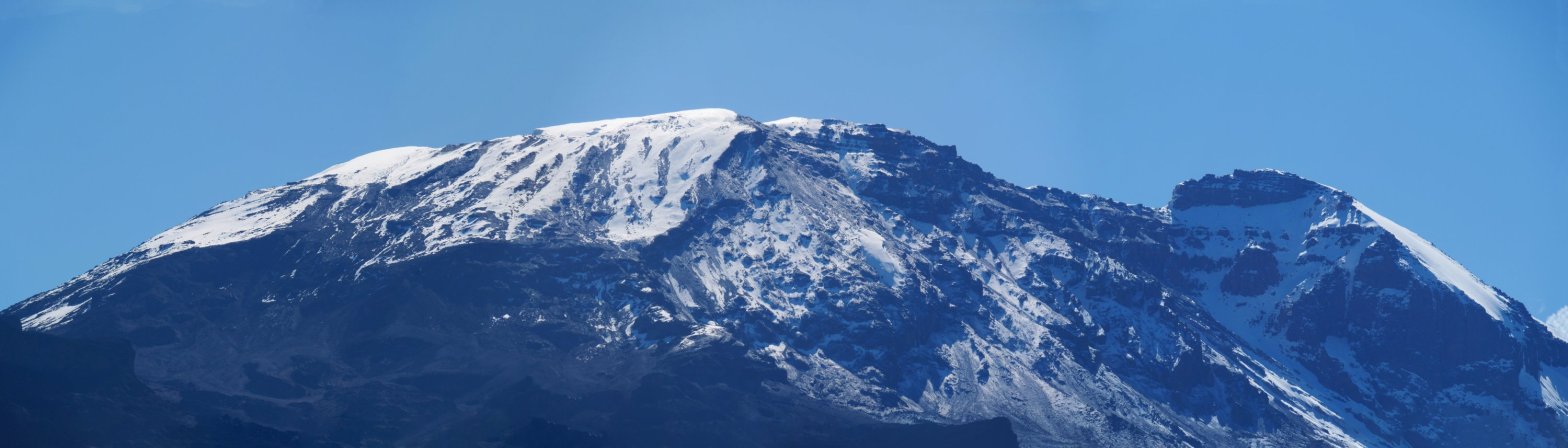
Kilimanjaro
It’s taken us a little while to put our experience climbing Kilimanjaro down in writing. Post-Kili we were both utterly exhausted and a little shellshocked. We’d heard that trekkers often say they find climbing Kilimanjaro much easier than they expected, until suddenly it gets much harder than they expected. That seems to be a pretty accurate reflection of our climb as well. We had chosen to climb Kili using the Lemosho route over 8 days. We picked this route because it has one of the best acclimatisation profiles – providing opportunities to ‘climb high and sleep low’ which is meant to lead to better sleep and better acclimatisation. But it is also one of the more arduous routes on the mountain. While the original ‘Coca Cola’ route goes straight up the mountain over 3 days, our route took 6 days to get to the summit, but spent a lot of time going down and then up again. Combined with poor sleep, this started to take a toll and we were pretty mentally and physically tired by the time we got to summit night.
The day before our climb we met with Gladys again, as well as meeting our guide Erick for a briefing and gear check. We had planned to hire some extra winter gear (down jackets, rain pants etc) from Gladys (who also runs the best stocked gear hire store in Moshi – such a business mogul!), and spent the better part of an hour sweating up a storm trying on clothes that we would need at the top of Kilimanjaro. It seemed almost inconceivable that in a couple of days’ time we would be cold enough to need these heavy winter clothes. We enjoyed an excellent pre-trip dinner at Gladys’s restaurant – the Flavour Kitchen, and tried to get a good night of sleep ahead of the first day of our trek.
Day 1
Lemosho Gate (2,200m) to Big Tree Camp (2,780m)
A minibus filled with a seemingly enormous crew (10 porters, 2 guides and a chef) and loaded with gear picked us up from the hotel early in the morning. It seems crazy that it takes this many people to get the two mzungus up a mountain. We drive for a few hours out of Moshi (on the southern side of Kilimanjaro) around to the western side where we will start our climb. The last part of the drive is over some very bumpy roads. At the gate there is a strict process where all of the gear for our expedition is weighed and divided up between the porters, to ensure that no porter has to carry more than 20kgs (5kg of which is their own gear).
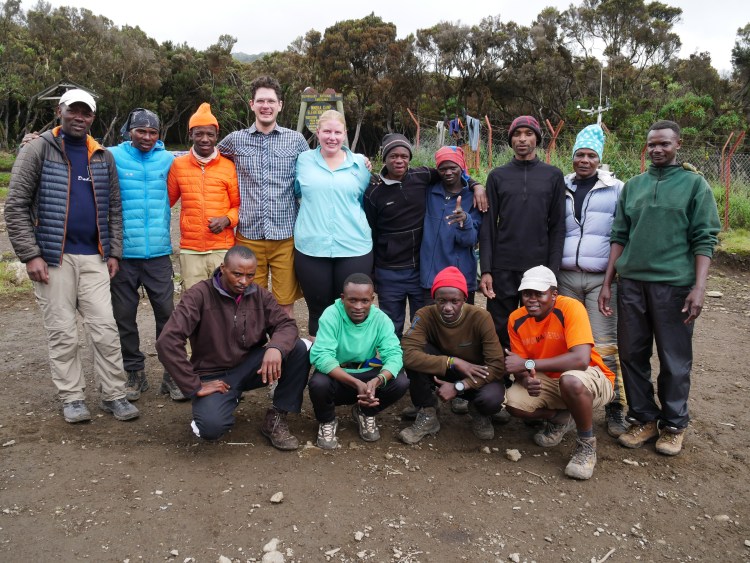
It starts to rain heavily as we have our lunch at the gate – unfortunately this will not be the last rain we see on our trek! We try to wait it out, but eventually we don our rain gear and begin in the rain.
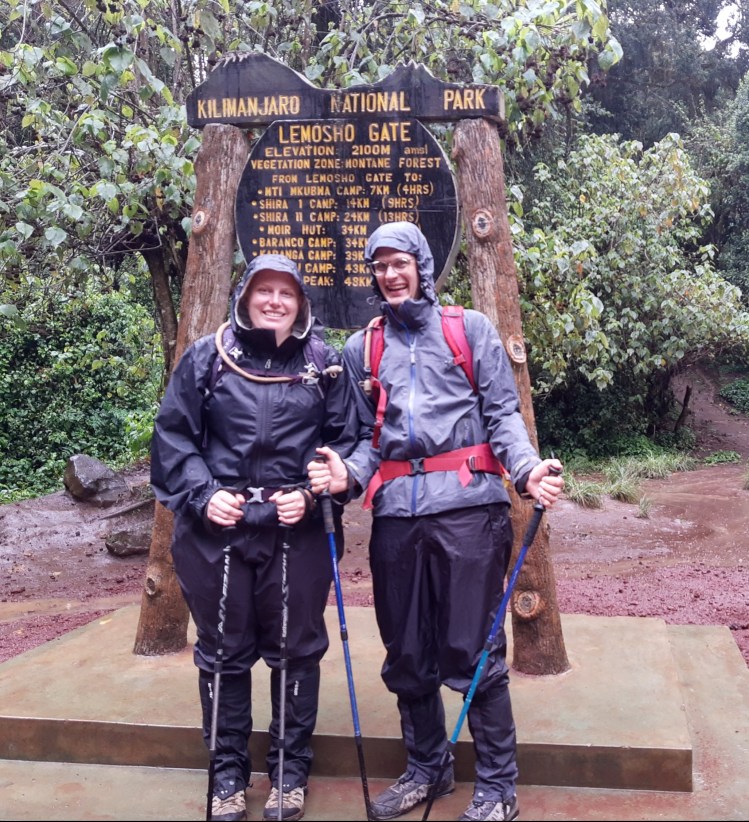
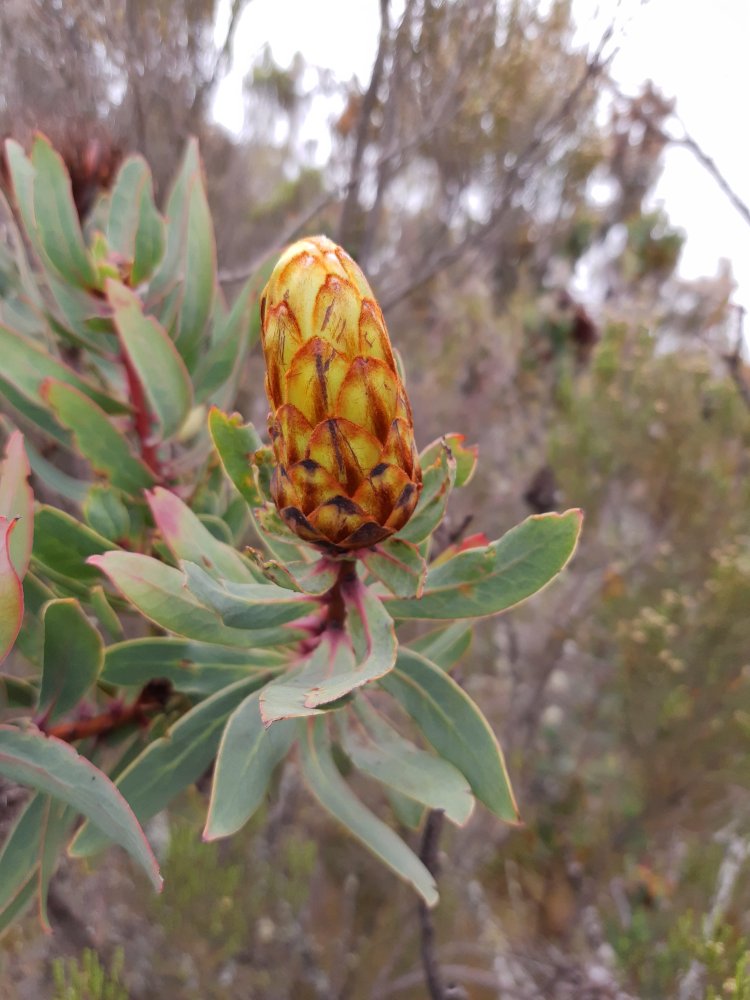
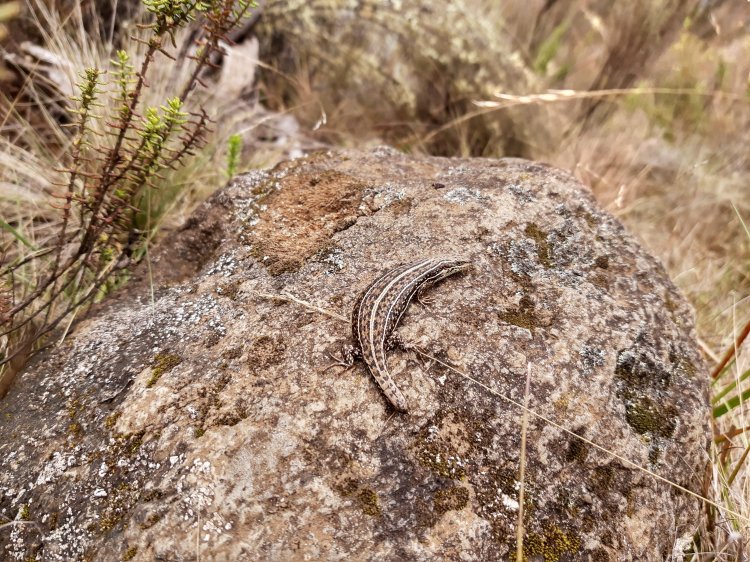
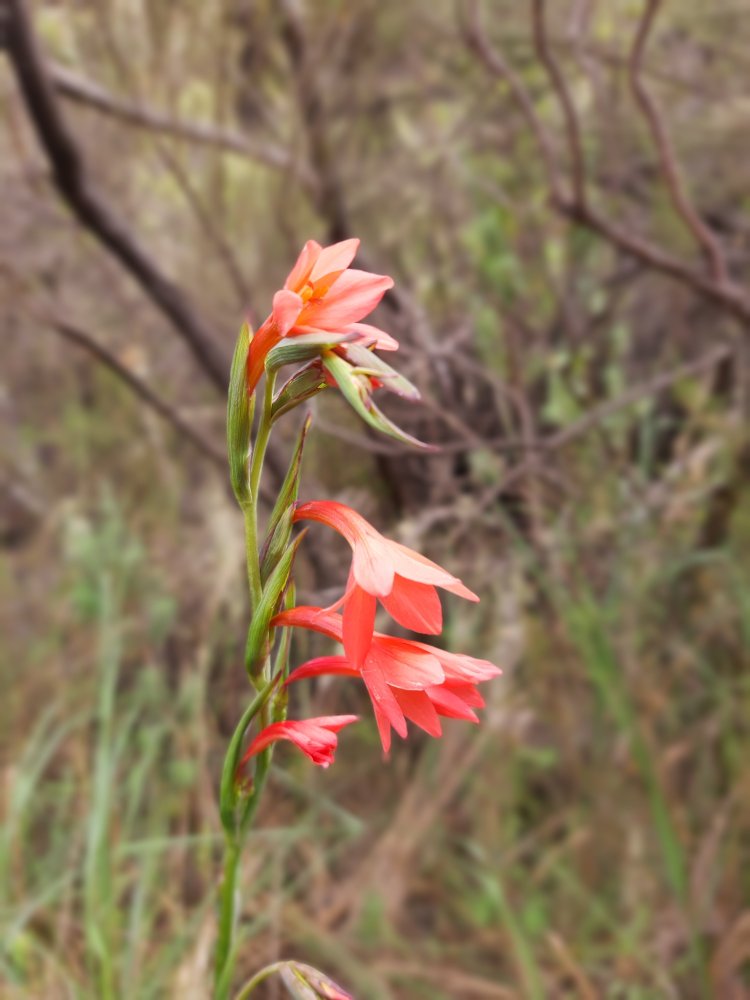
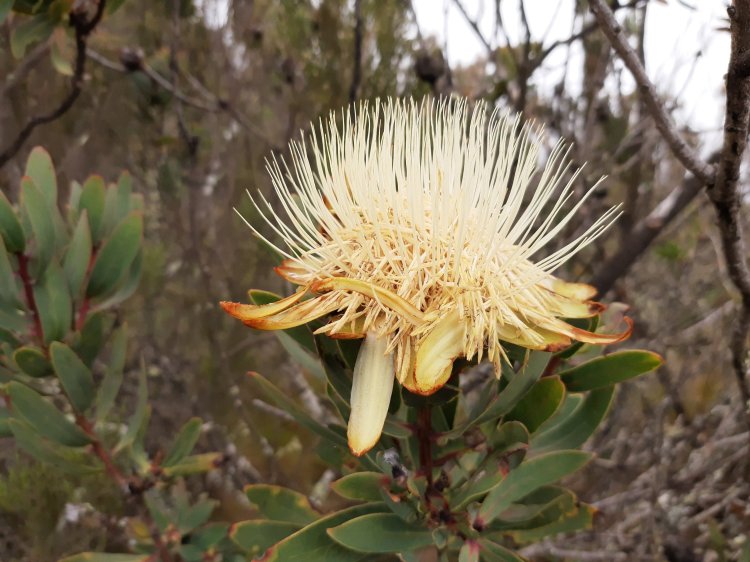
The walk today is a fairly easy three hours up to our first campsite. It’s muddy, but nothing compared to the mud we experienced at Volcanoes National Park in Rwanda, and at least we have walking poles this time. The rain stops after a while and we take off our rain gear. Our guide Erick and assistant guide Peter wow us with their encyclopaedic knowledge of the flora and fauna we spot from the trail.
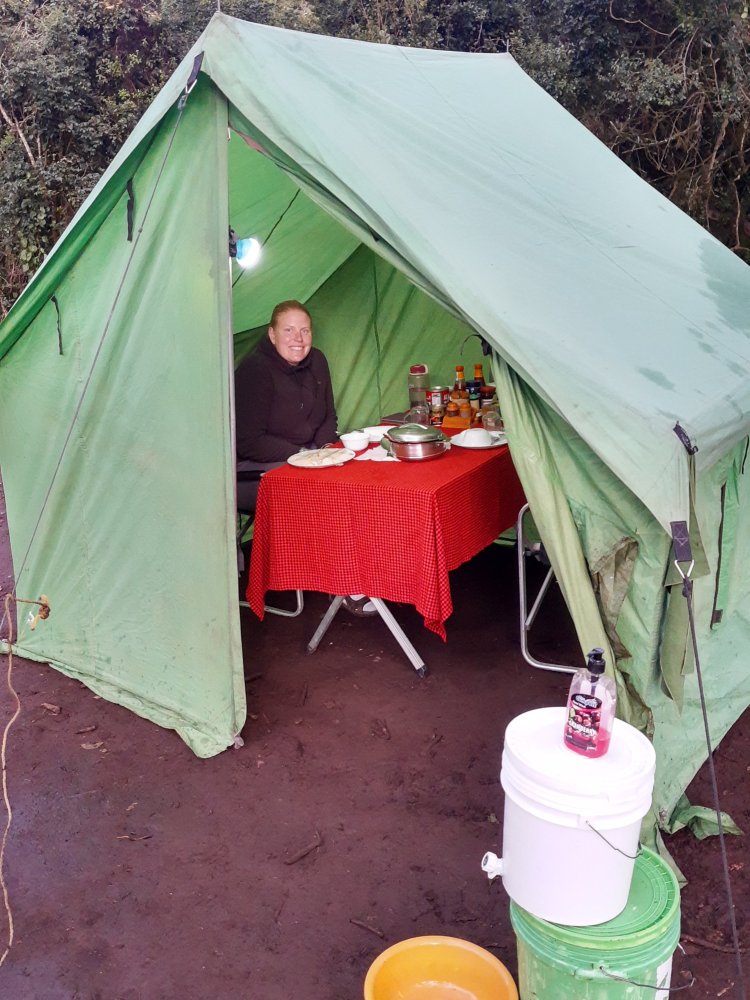
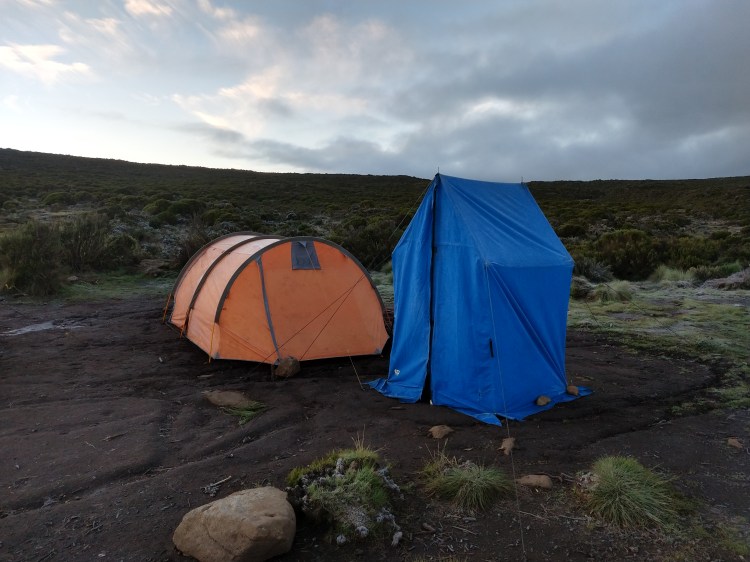
We arrive to find our camp already set up by our wonderful porters who are a lot quicker than us! After we expressed some concerns that the sleeping mats we had on safari were too short for Tim (who is 6 foot 4), we are delighted to find that Gladys has given us much larger thicker sleeping mats and a larger tent to accommodate them free of charge. But the best is yet to come – she’s also thrown in a private toilet tent for us! This is wonderful, because it means we don’t have to use the filthy, smelly, public long drop facilities. However, it also comes with the crushing guilt of knowing that some poor soul is carrying a toilet up a mountain for you – contents included. We are both a little bit in love with our toilet porter, Gerard, who always has the biggest smile on his face despite having what must be one of the grossest jobs on the mountain.
Day 2
Big Tree to Shira 1 (3,500m) campsite.
We are up at 6:00am and away by 8:00 as we head off to our next campsite. It’s a much tougher climb as we make our way up steep rocks and we stop for a break after the first two hours. We hoe into some amazing snack packs that our chef prepared for us that morning! From here on we manage to start to mingling with a few other climbers also doing the Lemosho route. We meet a poor Texan lady whose equipment hadn’t made it to Moshi in time, so she was climbing in the dress she wore on the plane!
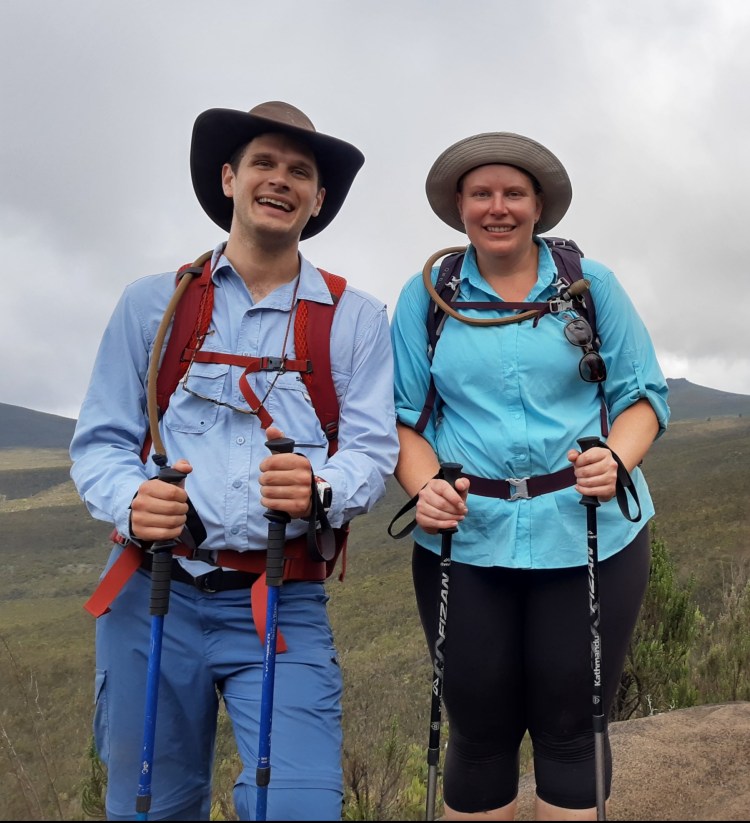
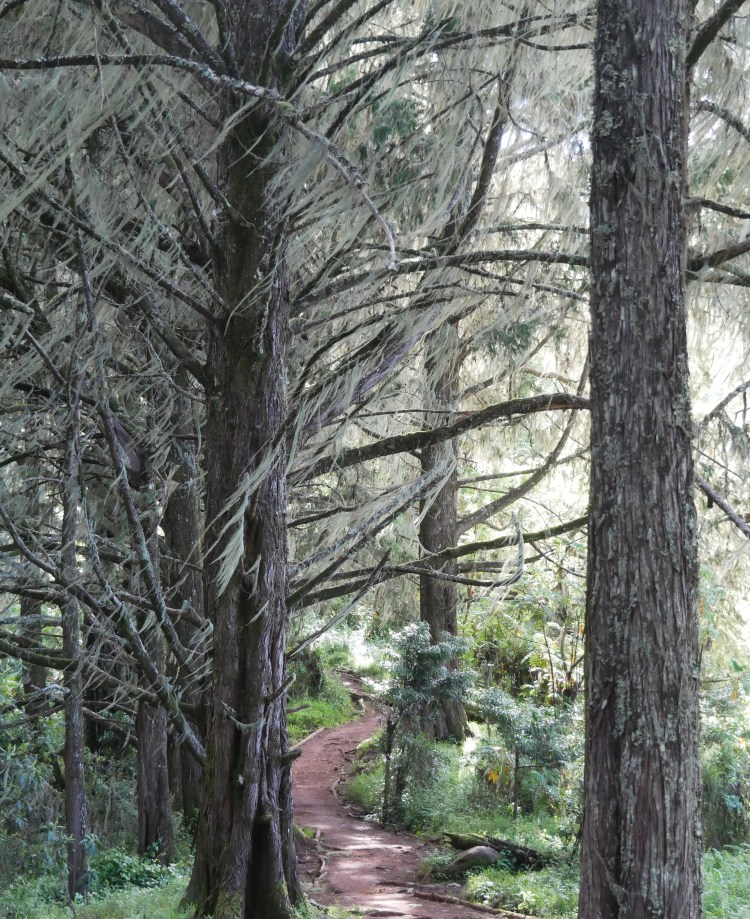
Some stunning views greet us as we move through rainforest and scramble atop some boulders along the way, gaining a vantage over the valley below. Spotted a few blue monkeys in the canopy of the forest. We’re very grateful for the gaiters we hired as we still trundle through mud from yesterday’s rain.
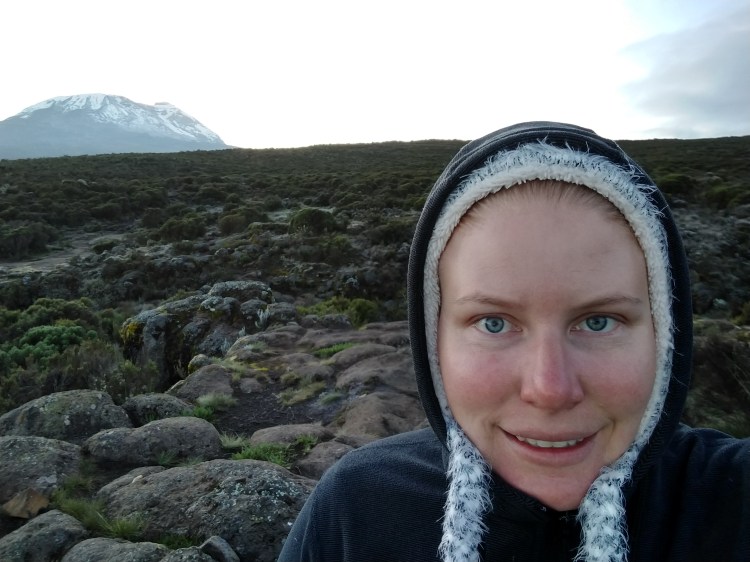
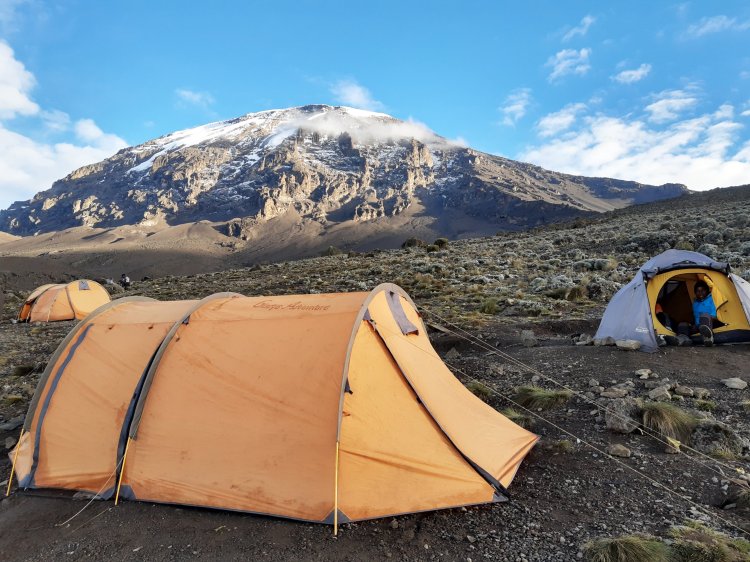
We reach Shira 1 for a late lunch, around 3 in the afternoon and settle into our tent. Shira 1 is the collapsed peak of one of the original three craters that made up the Kilimanjaro range. Stunning views of the summit from the camp when the clouds finally cleared.
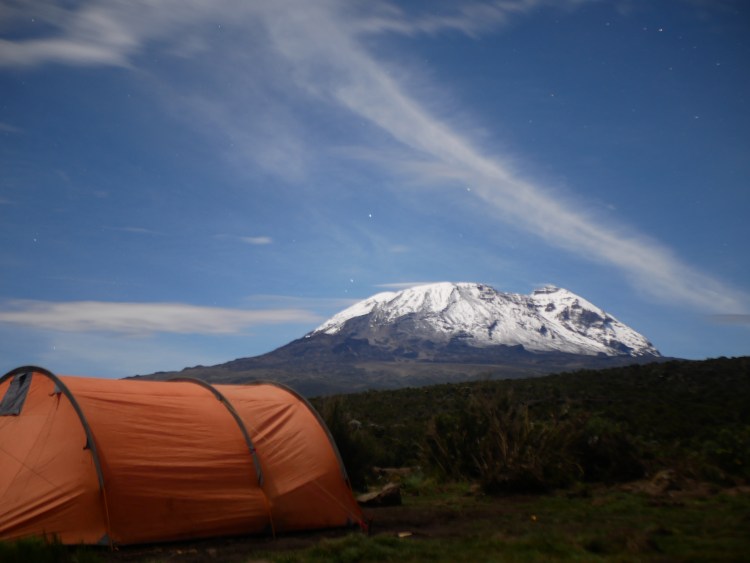
Day 3
Shira 1 to Moir campsite (4,140m) via Fischer (3,930m) for lunchstop.
We’re still feeling good today and enjoy a pleasant walk along the Shira plateau to Fischer camp, where we stop for a full cooked lunch with our crew. It’s a lovely morning as we set out, with a just a bit of cloud about, and some clear views of the summit.
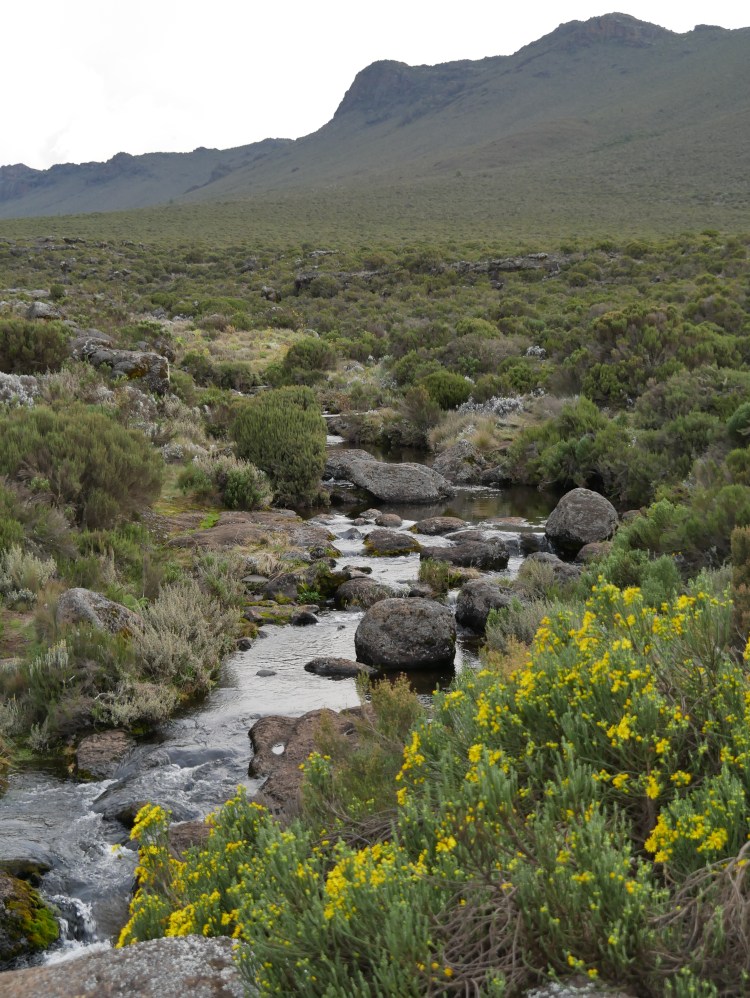
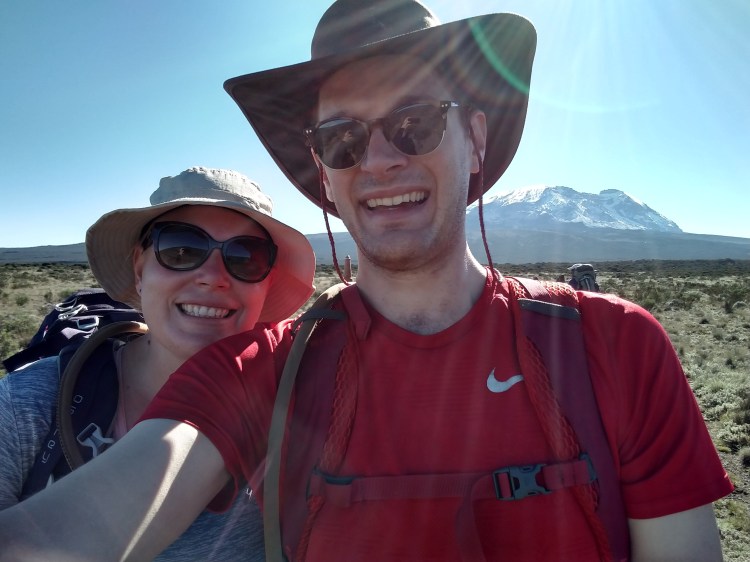
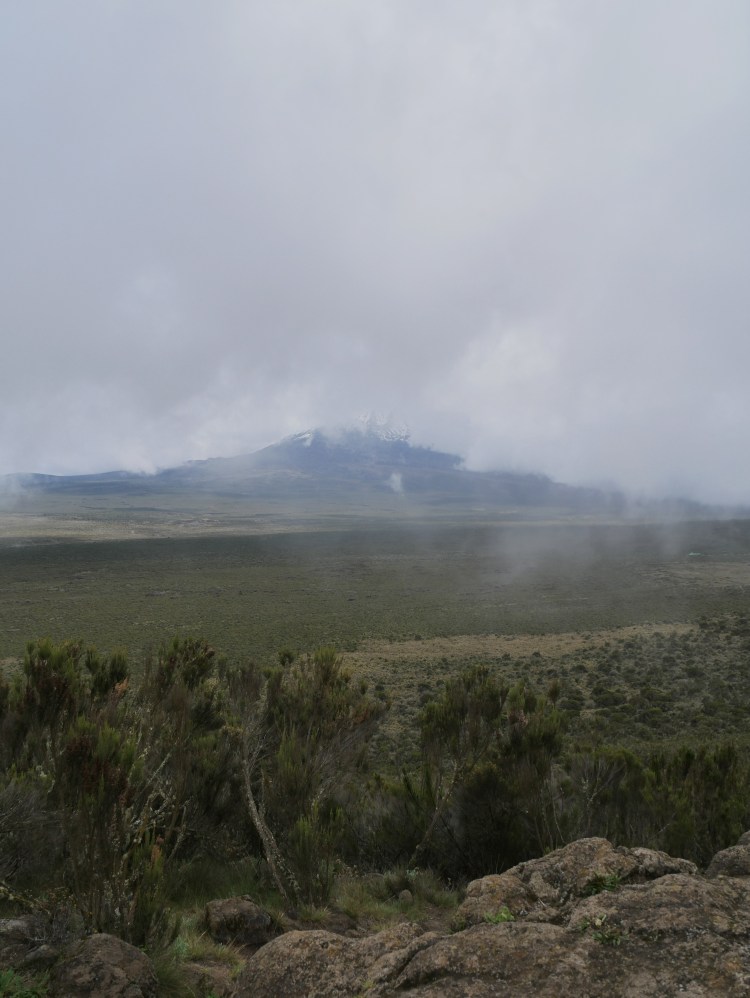
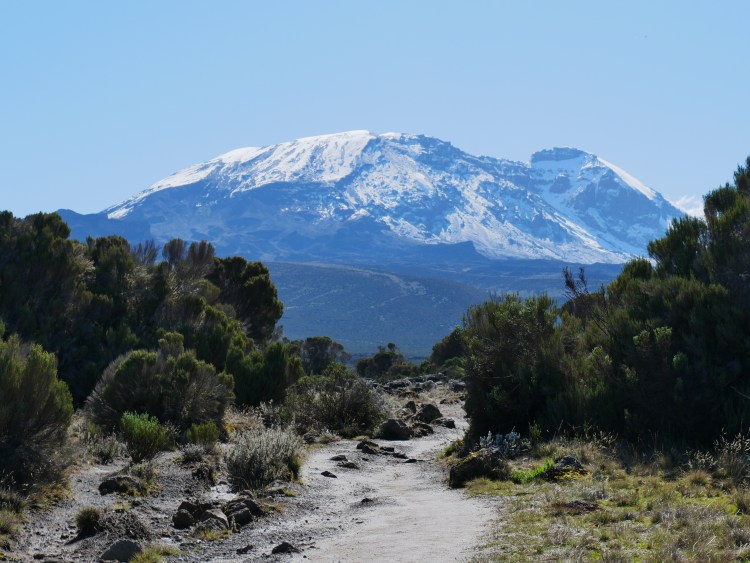
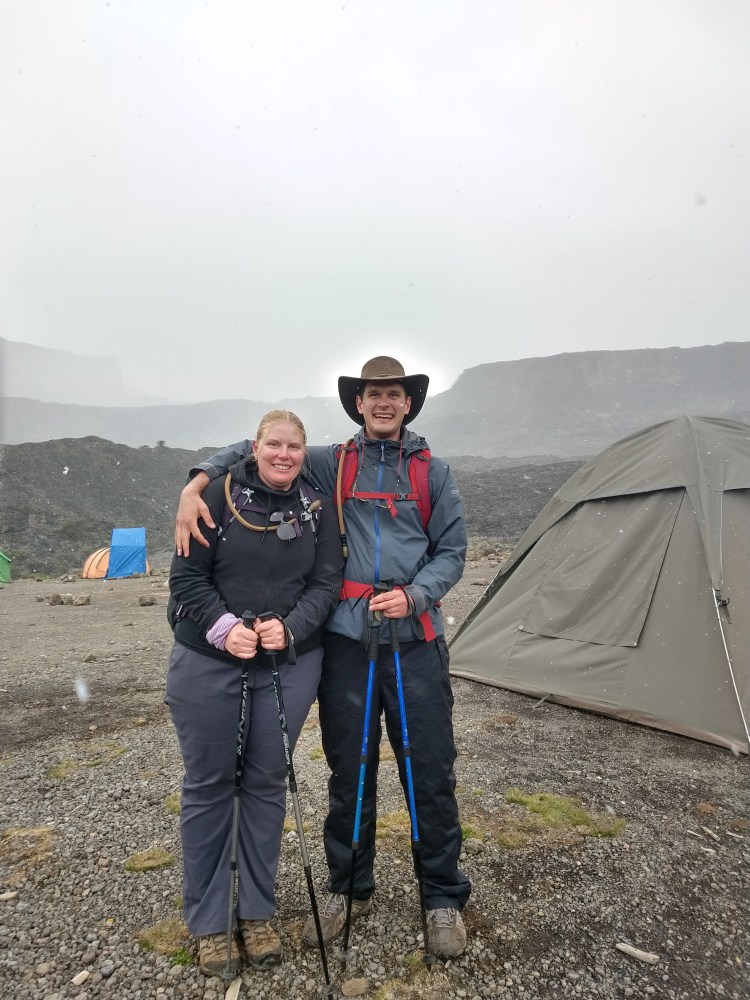
The weather takes a turn for the worse after lunch, and we battle through snow and gusty winds up to Moir camp. We’re still in good spirits, with a lot of joking about how this was meant to be the dry season! Moir camp is extremely exposed. This is the first night that we’ve been really cold, and we spend it huddling in our tent, terrified that the howling winds are going to blow our tents away.
Day 4
Moir to Barranco Hut camp (3,960m) via Lava Tower (4,630m)
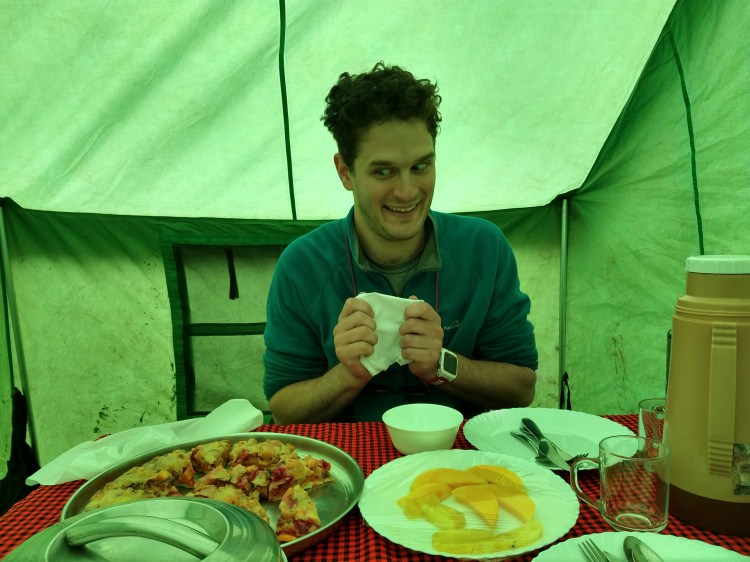
The freezing temperatures and lack of sleep the previous night starts to take a toll, and we struggle to find the motivation to get out of our warm sleeping bags this morning. We spend the first half of today climbing up to Lava Tower (4,630m), where we enjoy an amazing hot lunch of pizza and soup!
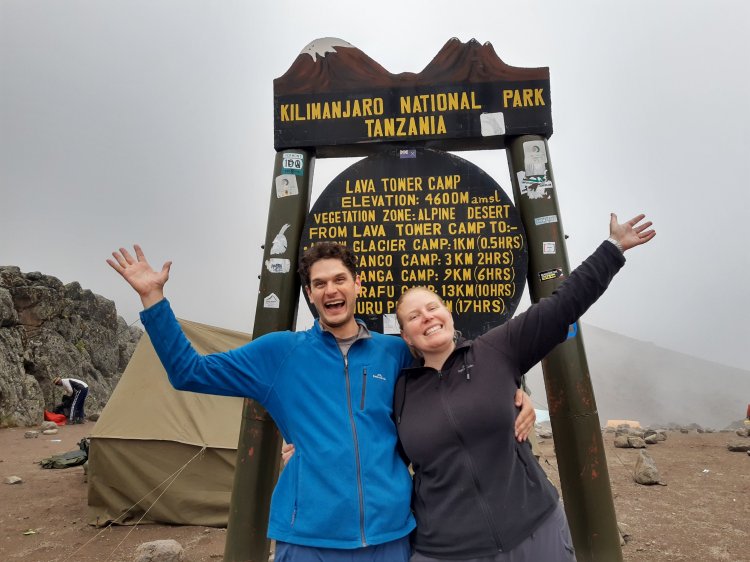
We spent much of the morning walking in the clouds which have rolled in, and after lunch they turn to rain as we make the steep descent from Lava Tower down to Barranco (lower than we started the day at Moir camp!) It’s pouring with rain and there is some very slippery scree and rocks to scramble down. Lightning and thunder around us as we descend. Fun! Erick tells us we’ll be OK, so long as our phones are off. We hurriedly tear open our jackets and bags to switch off every electronic device, soaking most of the contents within.
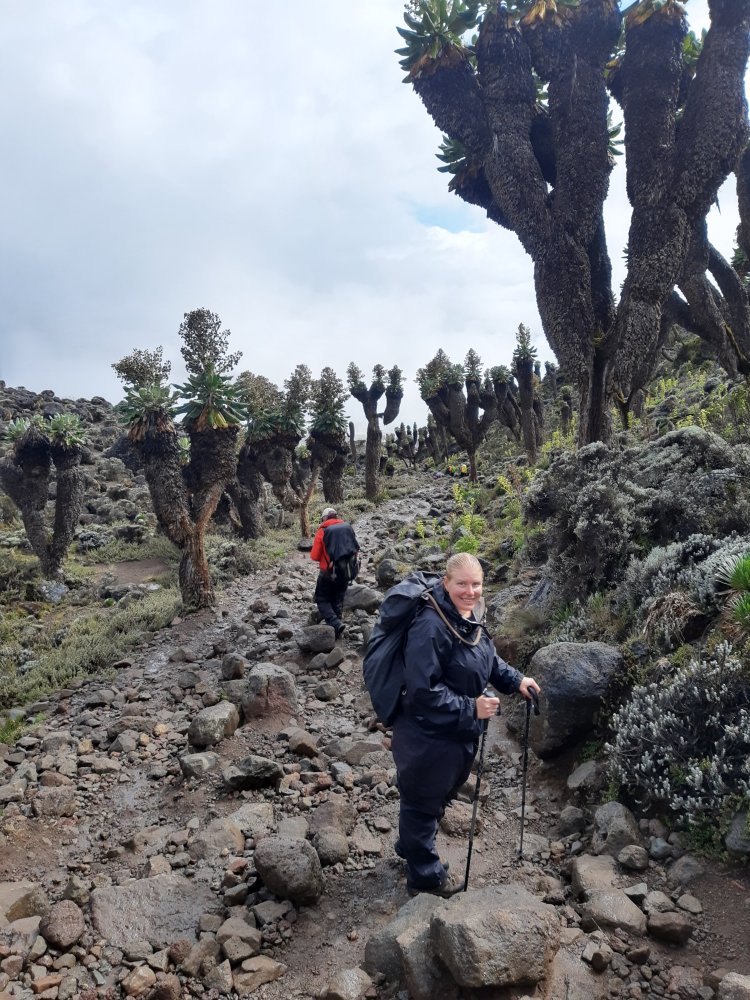
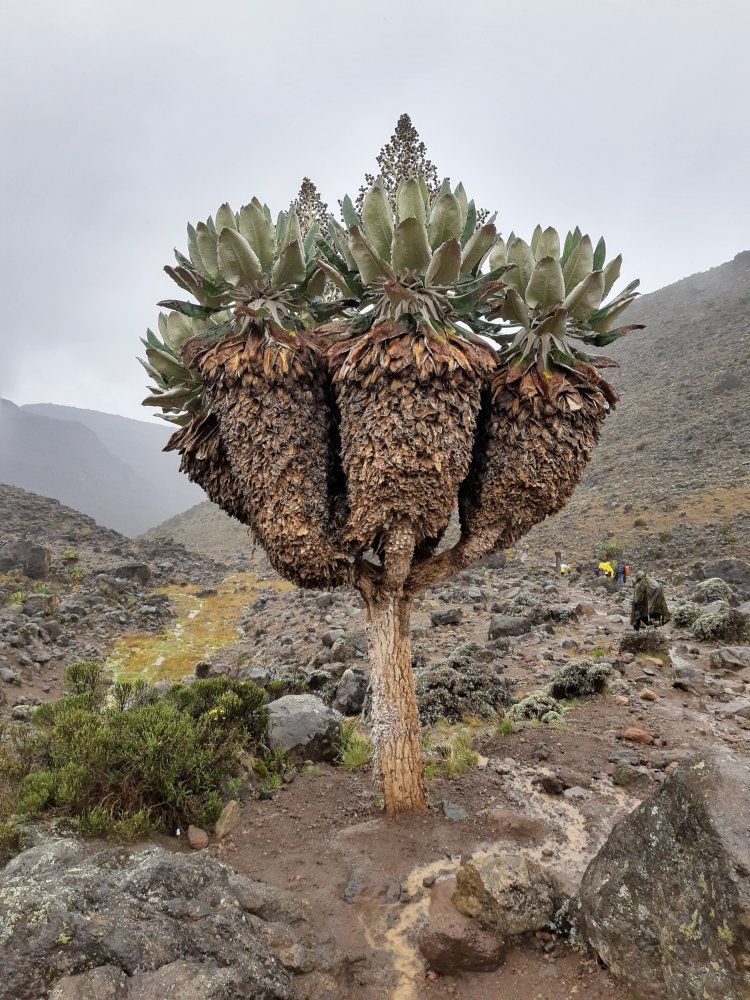
The valley leading down to Barranco is a remarkable landscape – a river flows steeply down through the middle of it, making a series of cascading waterfalls. Halfway down the valley we come across a number of extraordinary trees. Between Moir camp and Lava Tower, we’ve mostly been walking in alpine desert, with nothing but a few spouts of weeds and some mosses for vegetation. These trees look like some kind of cactus, some growing to 10 metres tall. They are apparently a fairly short lived thing, rarely growing beyond 20 years before the elements bring them crashing to the ground.
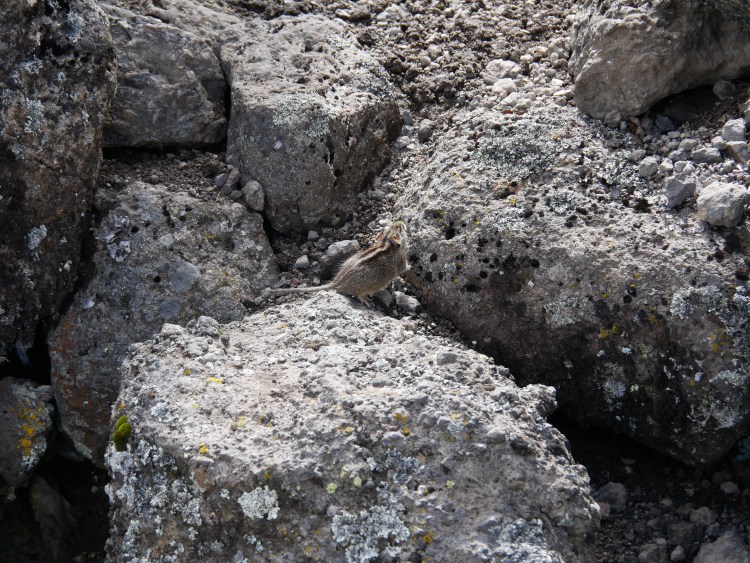
A four-striped mouse, even all the way up here at 4,600m!
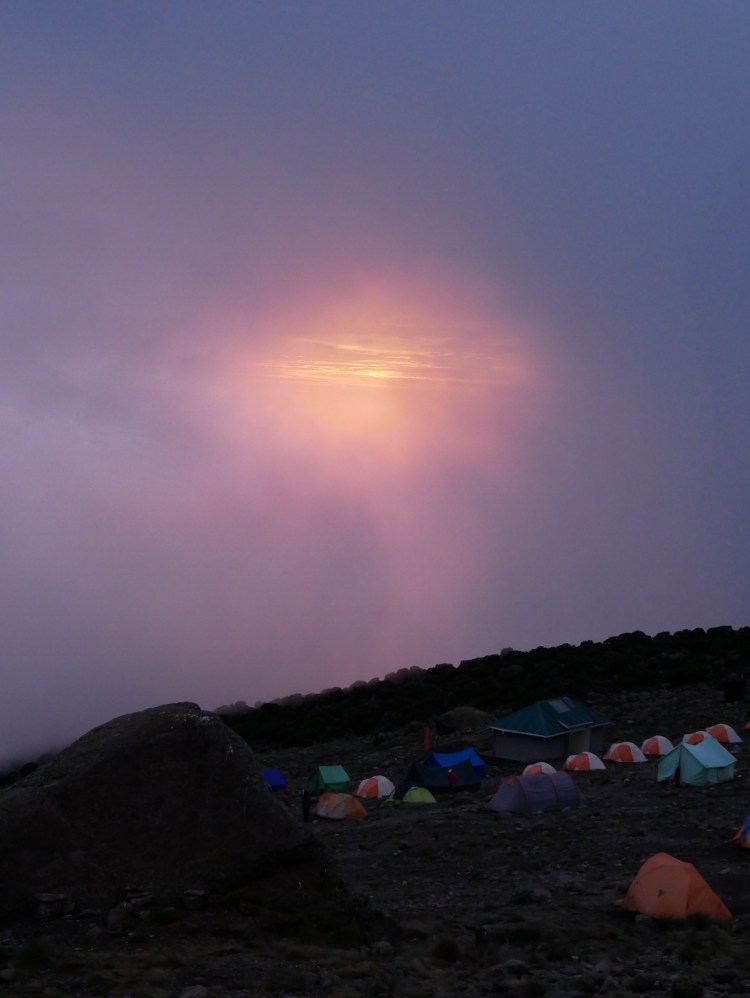
We arrive at our camp at the base of the Barranco Wall soaked through, rain jackets and pants not proving as waterproof as we had hoped they were. Our crew welcomes us to camp with a rousing rendition of the Kilimanjaro song! Perhaps mercifully, the valley is so full of thick fog that we cannot see the infamous Barranco Wall – a 200 metre plus sheer face of rock – that we are going to have to scale the next morning. The fog below us does partially clear in the late afternoon however, and we catch a glimpse of the town of Moshi far below.
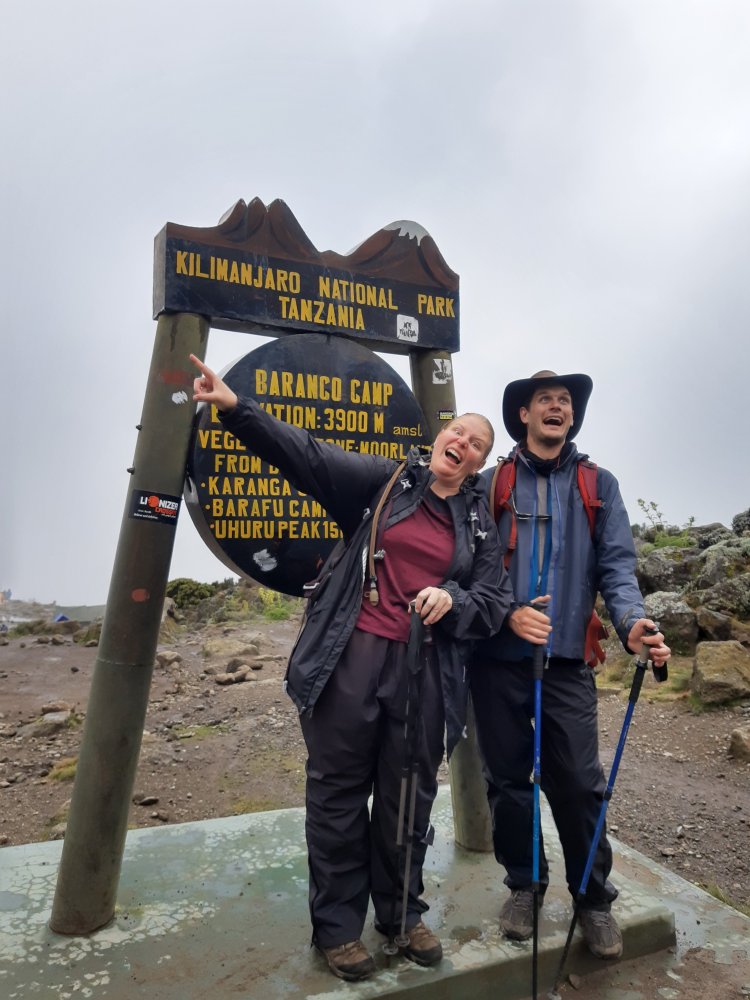
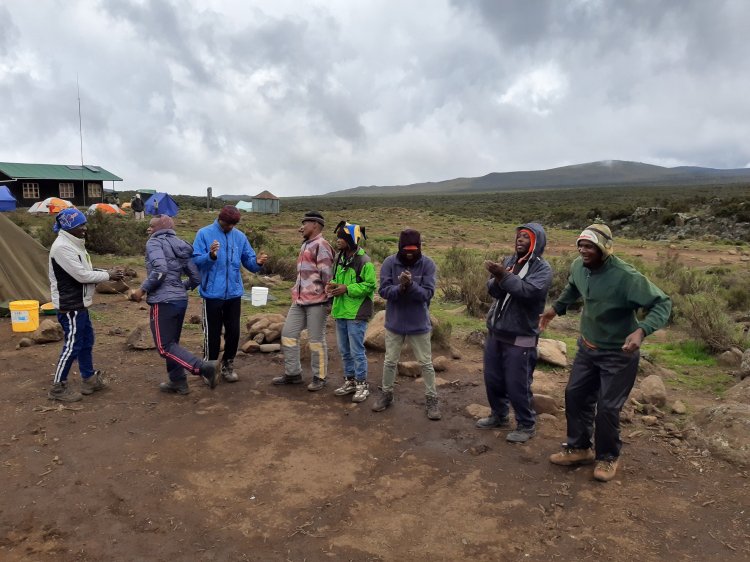
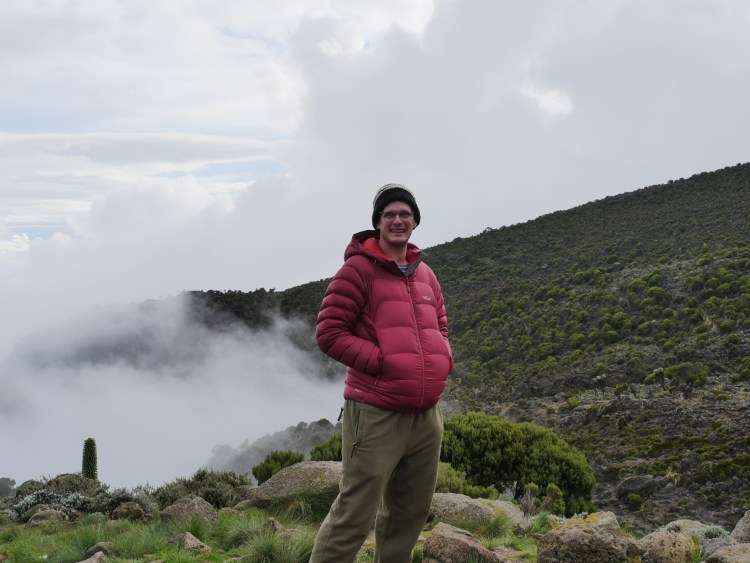
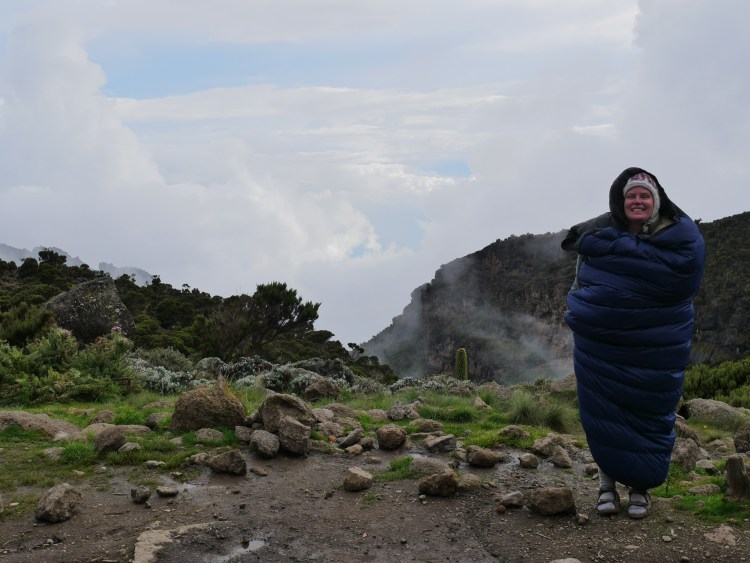
Kirsten rugging up after the soggy descent to Barranco
Day 5
Barranco to Karanga (4,040m)
Our best efforts to dry our wet things overnight have been unsuccessful, and we start the day feeling pretty soggy. The Barranco wall looms above us looking like a sheer rock face. Our guides assure us that there is actually a path and we won’t be going straight up it. We begin, and pretty soon we have to put our poles away and use our hands for scrambling. We’ve decided not to wear our rain paints today, because they restrict our ability to move our legs fully as required for scrambling. The rains set in again and anything that had managed to dry out from the day before quickly becomes wet again. The climb up the wall is exhilarating. There are a few tricky sections, but our guides lead us through them without breaking a sweat. It’s probably just as well that we are surrounded by dense cloud, because it means we can’t see just how far there is to fall!
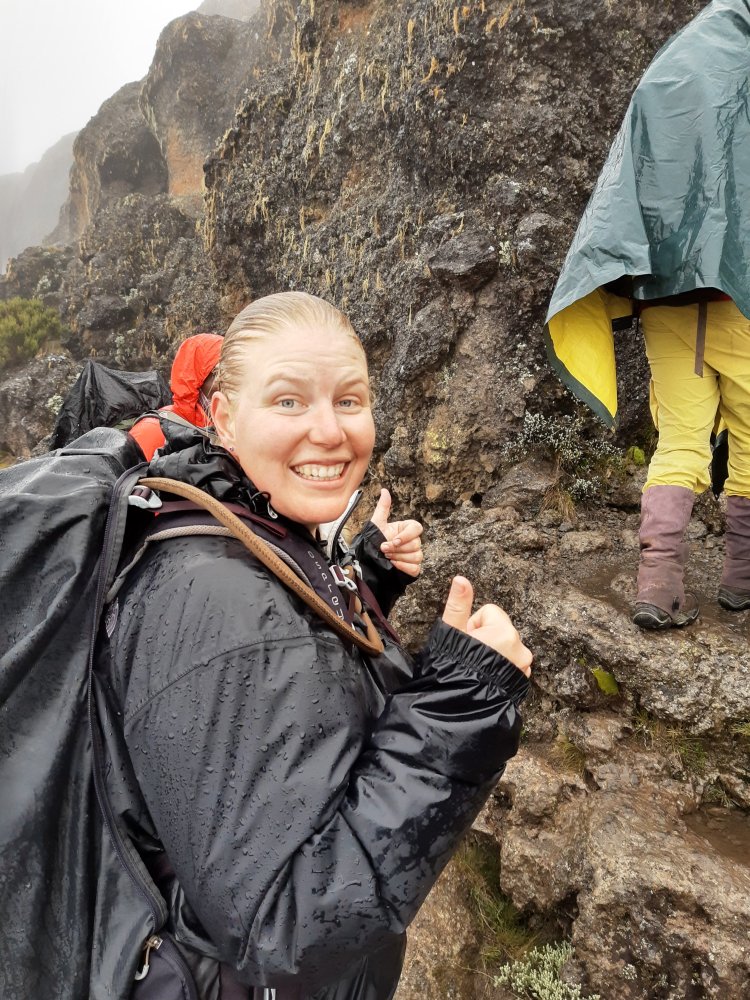
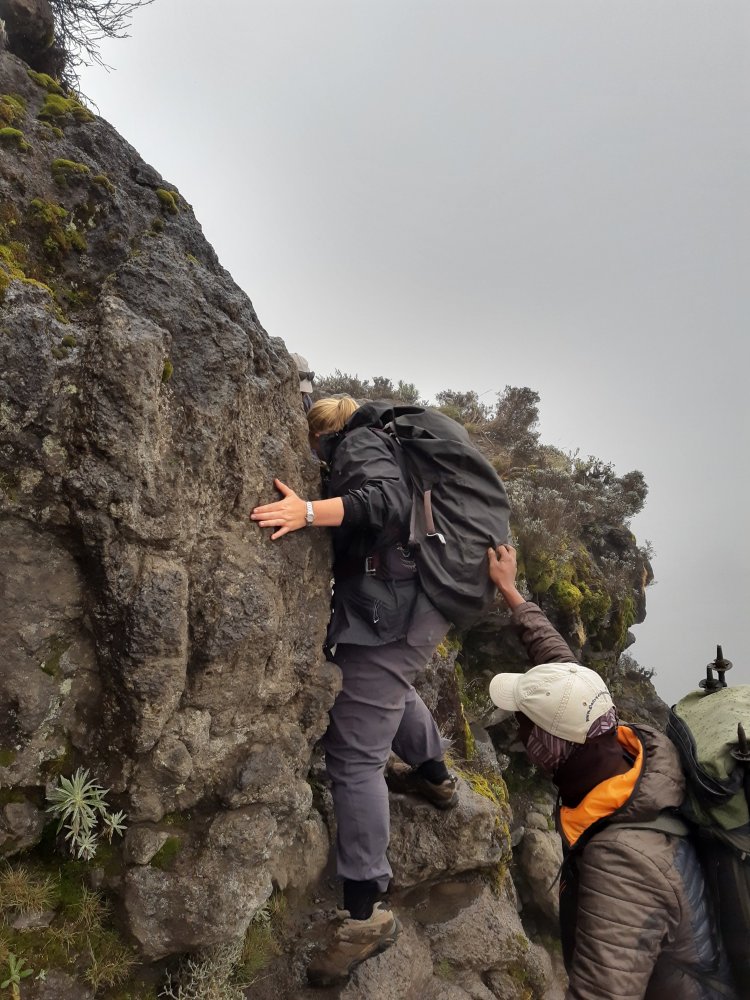
We reach the top, but sadly are not rewarded with panoramic views of the valley below all the way down to Moshi, because we can only see 2m in front of us in the fog. We know that we are spending tonight at a similar elevation to the previous night, which means the next few hours are spent climbing downhill again and losing all of the elevation we gained coming up the wall. There’s no point putting our rain pants back on at this stage, because our pants are already soaked through.
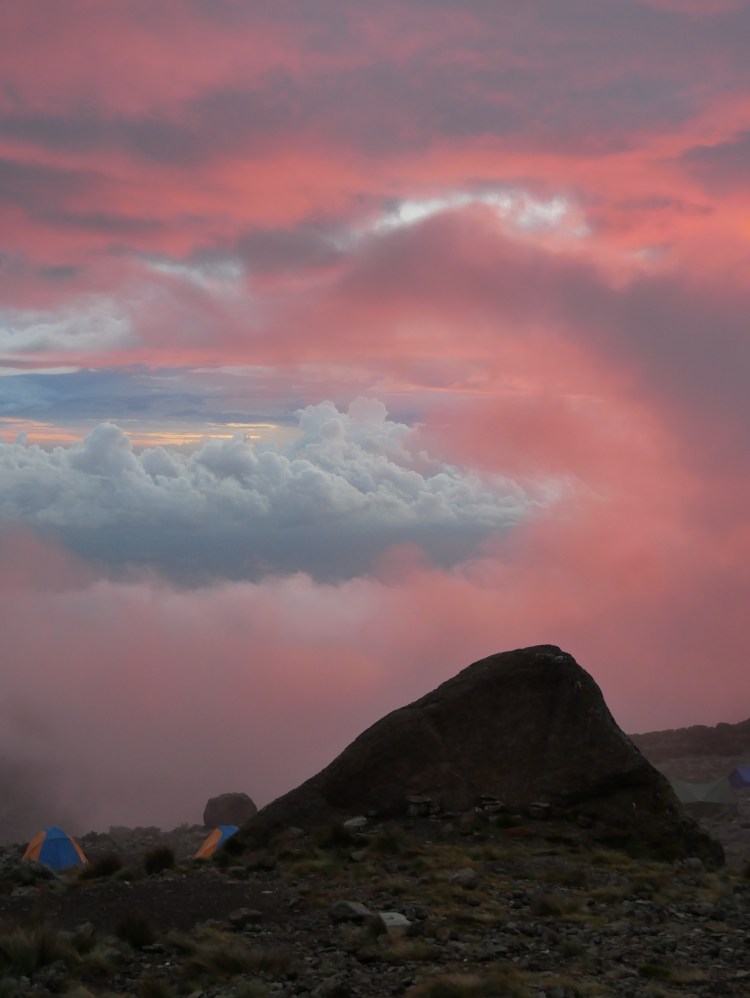
The last stretch of the walk to Karanga camp is the toughest mentally. We come down across a plateau and can see the camp ahead of us at eye level. However as we get closer, we realise that there is an enormous chasm of a valley between us and it, which we will need to climb down and back up to reach the camp. At least we are rewarded towards the end of our final ascent when the clouds in front of the mountain clear, and we are able to see Kibo (the peak we will be climbing). It’s the first time we’ve been able to see it in days because of the rain, and we are stunned by how close it is and also how much bigger it looks from here as it looms 2000m into the sky above us.
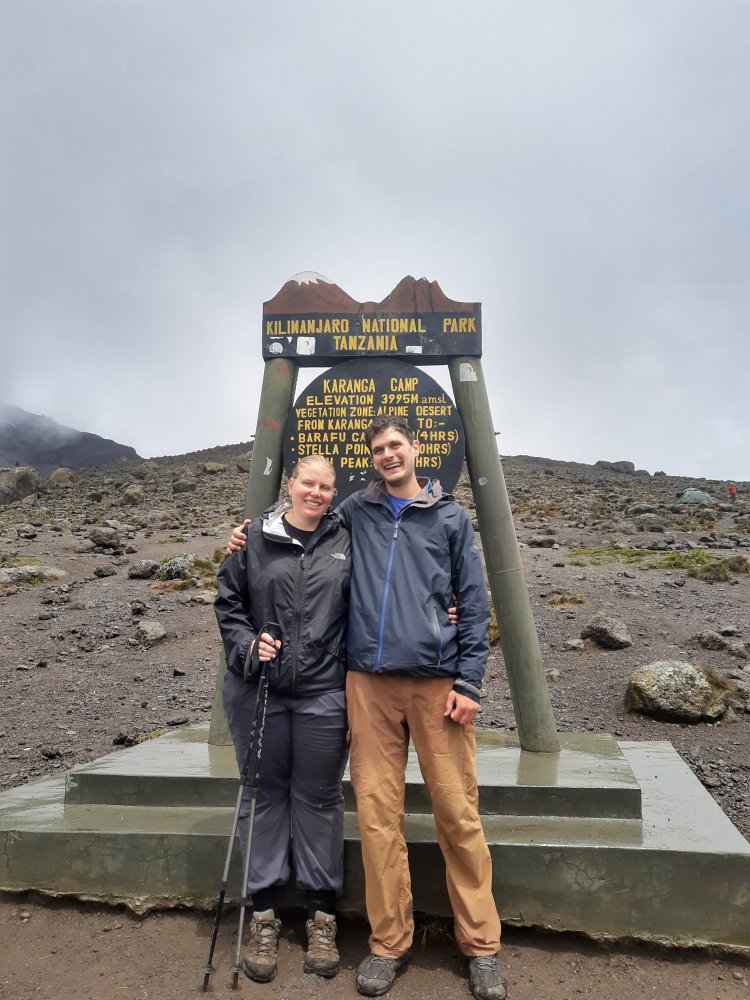
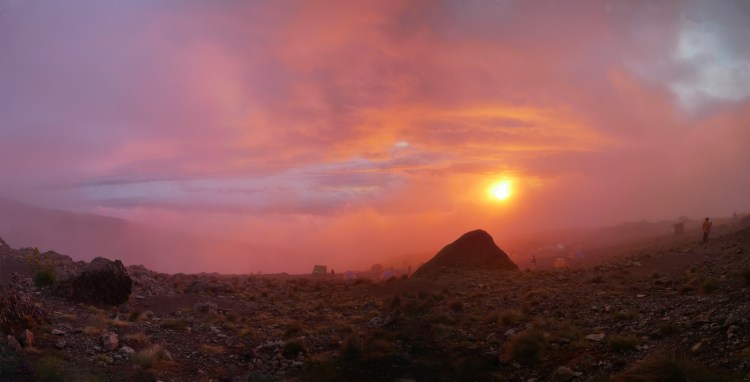
We reach camp in time for lunch, and our top priority is to dry out our clothes and shoes before summit night tomorrow. We are extremely lucky that the sun comes out for a bit in the afternoon, which takes care of most things. Our crew take the things that haven’t dried yet to place by the cooking fire in the evening, and they come back to us dry in the morning. Our guide, Erick, is particularly concerned about Tim’s shoes, which are apparently not water proof anymore. He takes them away and works some sewing magic on them to make sure they are ready for the snow on the summit. We feel very grateful that we chose the 8 day route at this point, because if we were doing the 7 day route we would be heading straight on to Barafu (base camp) this afternoon and summiting tonight without any chance to dry our clothes. Our guides tell us that another climber has decided to descend from Karanga, because all of their clothes are wet.
Day 6
Karanga to Barafu (4,640m)
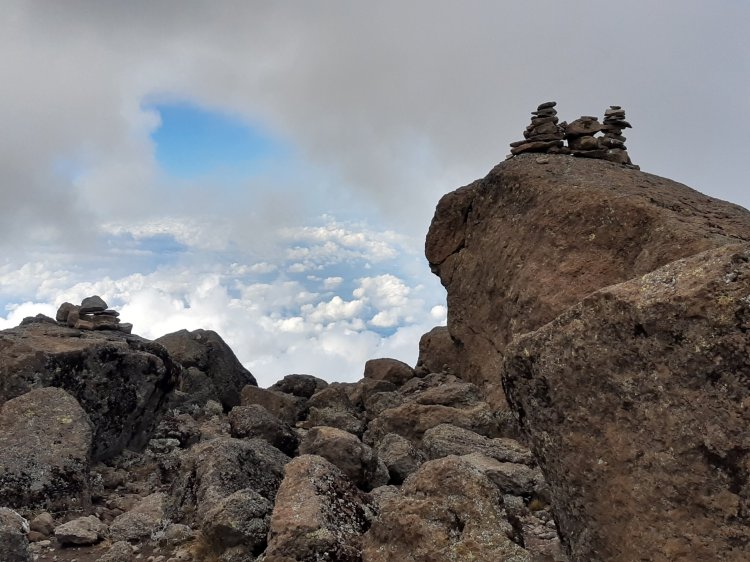
It’s a short 4km walk from Karanga to our base camp (Barafu) today, but the past 5 days and the lack of sleep is really starting to build up and we are feeling tired. Unfortunately, it’s all done in the thick fog, which is starting to get a bit tiresome. We go as quickly as we can, terrified that it will start to rain again and our newly dried clothes will get wet before the summit. Fortunately, the rain holds off, and we reach Barafu in time for lunch. While we’ve both managed to keep our appetites pretty well until now, we start to struggle to get the food down. We’ve been really lucky and both have seemed to be coping well with the altitude up until this point. Kirsten has had a cough from the dry cold air since day 2, but both of our pulse oxygen readings (taken every morning and evening by our wonderful guides) have been great – in the low to mid 90’s which is good at this altitude – and we haven’t experienced too many other symptoms of altitude sickness like headaches, nausea, vomiting, diahorrea etc. (spoiler alert – things soon take a turn for the worse!)
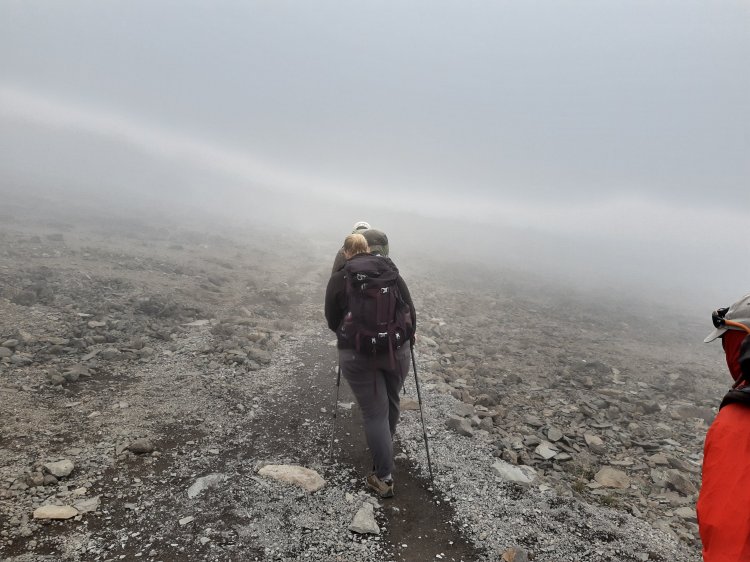
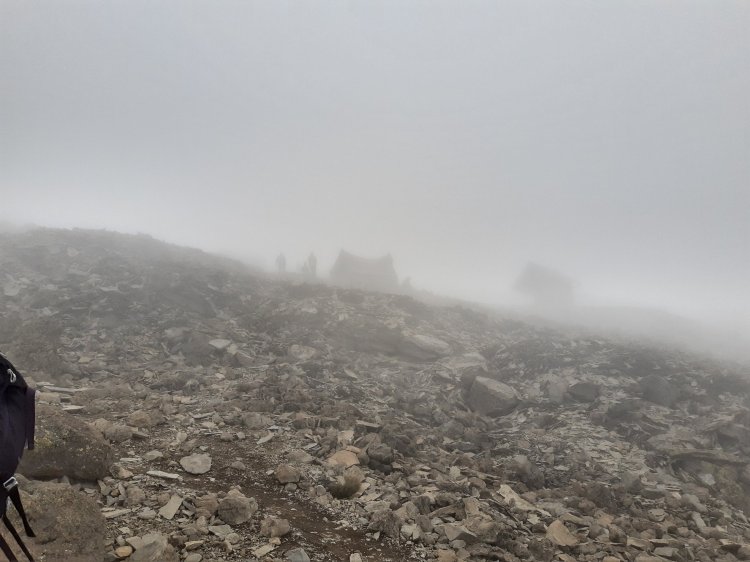
We spend the afternoon resting and preparing our things for summit night. Then it’s an early dinner and off to bed at 7pm to try to get a few hours’ sleep before our 11pm wake up call. Of course, nerves prevent either of us from sleeping a wink. Then, around 9pm, Tim has to make a lot of urgent trips to the toilet tent with a sudden onset of diahorrea and nausea.
Day 7
Barafu to Uhuru Peak (5,895m) to High Camp (3,820m)…to Mweka Camp (3,080m)
Our 11pm wake up call comes, but we are both very much awake. Poor Tim is feeling awful, having to rush to the toilet every few minutes. We stuff him full of Imodium, and he somehow manages to pull himself together enough to begin our ascent, although we are off to a late start and it’s after 1am by the time we get going. As we crawl out of our campsite, we can see the headlamps of other climbers twinkling above us, some already a third of the way up to the summit. It’s a slow crawl up the mountainside – Tim looks like the walking dead, shuffling along. We stop frequently in the first few hours for Tim to deposit bits of himself along the way. Our guides are wonderful, encouraging him, giving him sips of water and trying to get him to eat something to replenish his blood sugar. We continue to stop regularly through the night to pause, buckle over, sip some water, force down some food, settle our breathing and then resolve ourselves to continue. It goes something like this for the next nine hours.
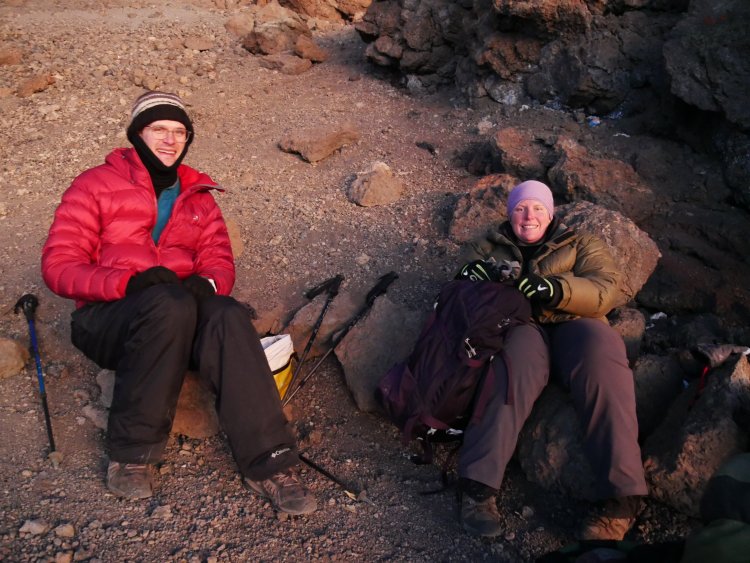
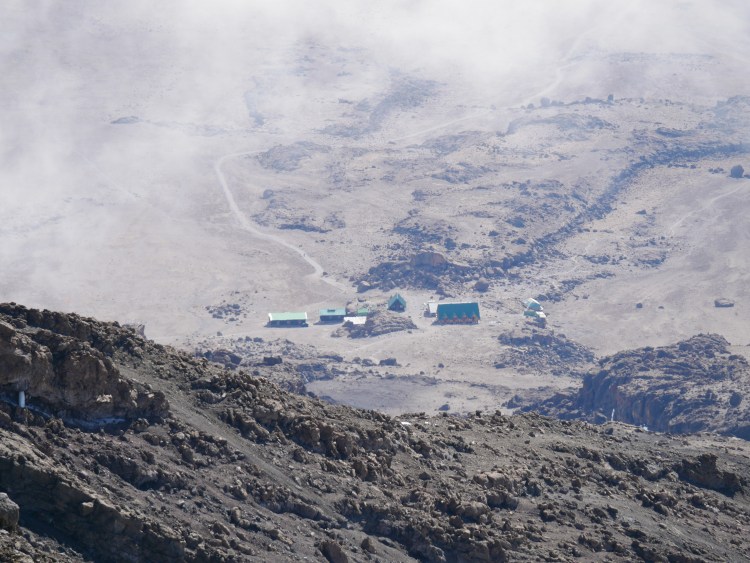
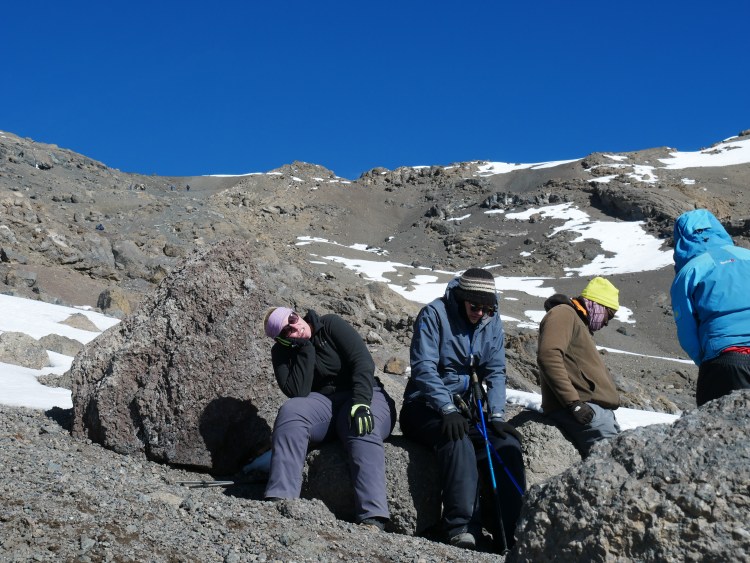
Around 6am the sun comes up, which is a welcome end to the dark cold night. But it brings with it the realisation that we are still a very long way from Stella Point, where we had aimed to be for the sunrise. There are a range of reasons that the summit ascent on Kili is commonly done in the dark, one of which is that it stops climbers from seeing the incredibly steep switchbacks that go on and on ahead of them – a soul crushing sight if ever there was one. We shuffle onwards, with our guides yelling at us not to look up every time we stare in horror at how far way the peak still seems. Kirsten’s cough has started to get worse, and she has started to wheeze on every breath, although she doesn’t realise it at the time (she remembers sitting on a rock at one point and wondering why a little bird is whistling in time with her breathing).
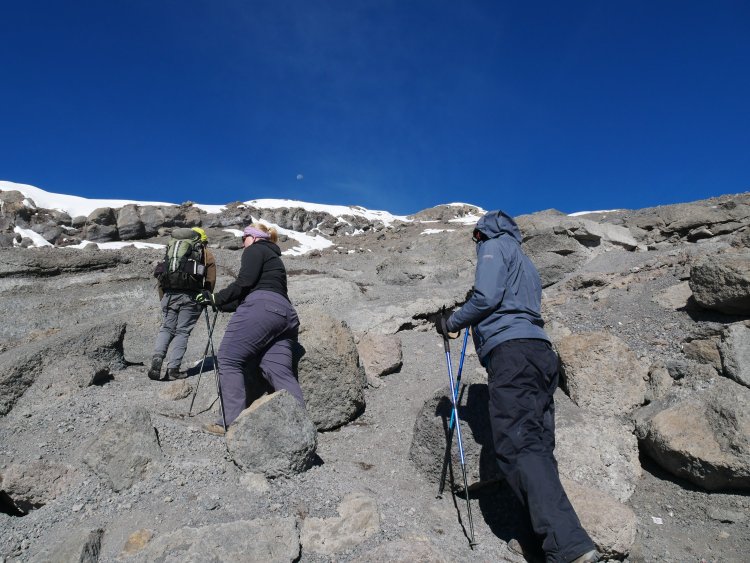
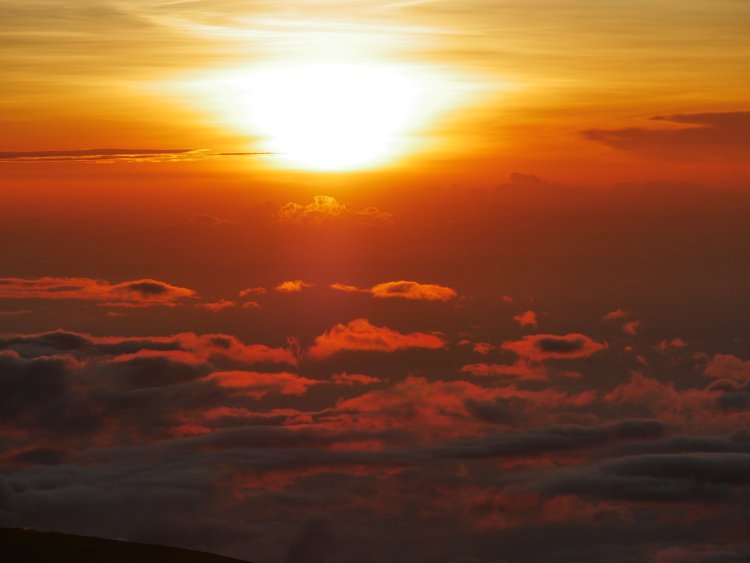
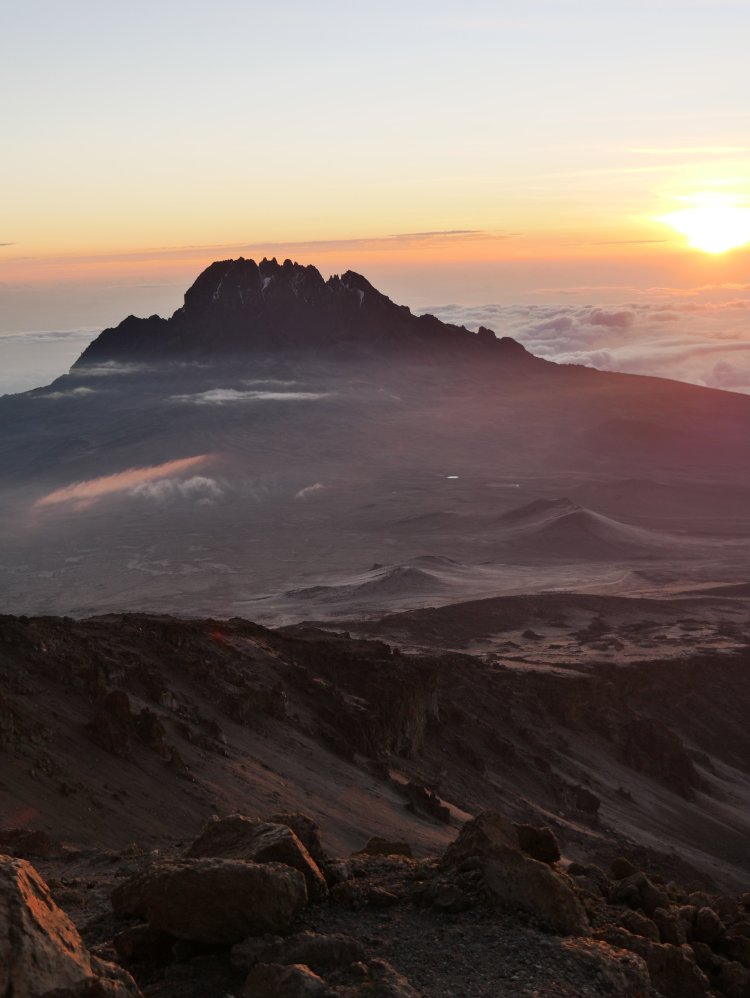
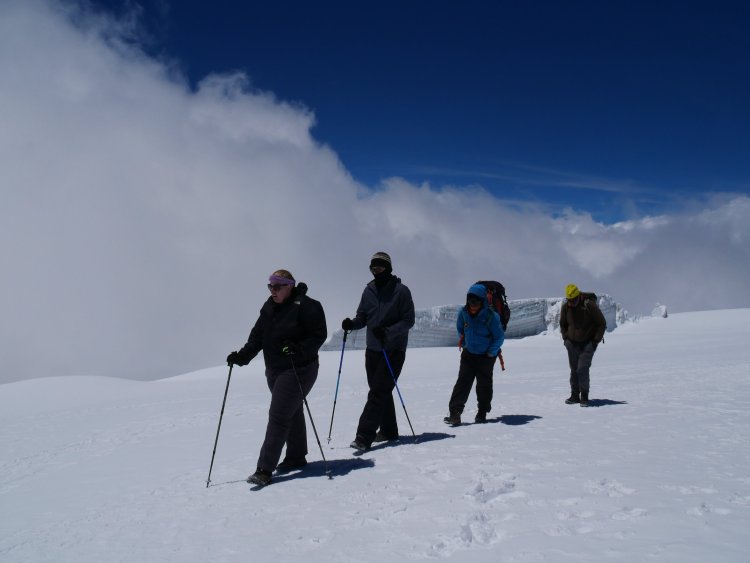
Somehow, against all odds, we shuffle our way up to Stella Point around 10:00am. It’s an emotional moment, having spent so many hours in the long, cold night feeling like we would never make it here. From Stella Point, it’s only 700m around the crater rim to Uhuru peak, the highest point on Kilimanjaro and the roof of Africa. It’s not really steep, but it still takes us a loooong time as we trudge through the slippery snow and ice. It alternates between being freezing cold when the wind gusts across blasting snow in our faces, and boiling hot when the wind settles and we bake in the sun at this altitude. Tim’s smart enough to be wearing a buff over his face, but Kirsten winds up with terrible blisters on her lips from being sun and wind burnt up here.
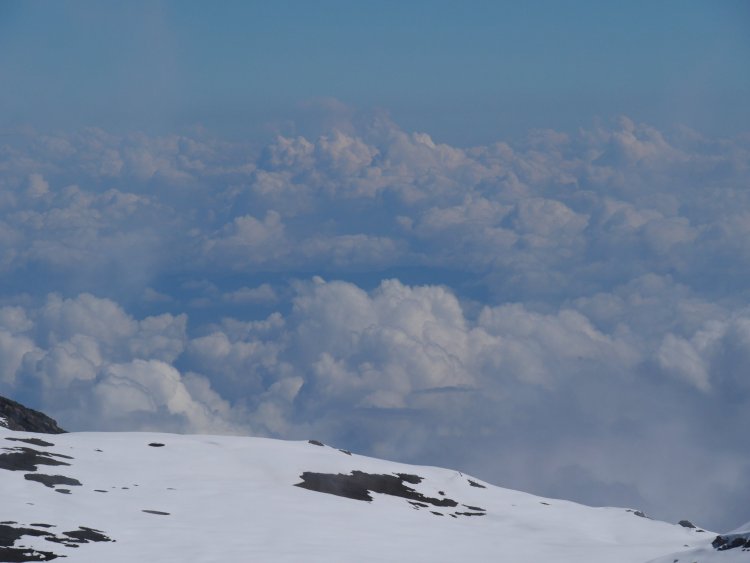
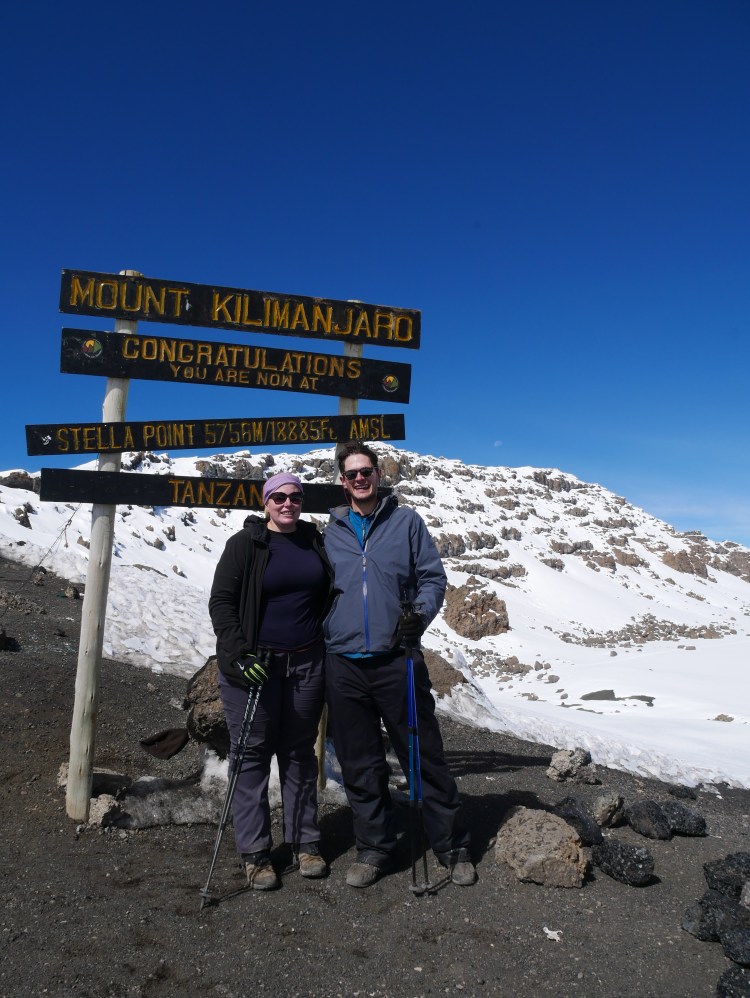
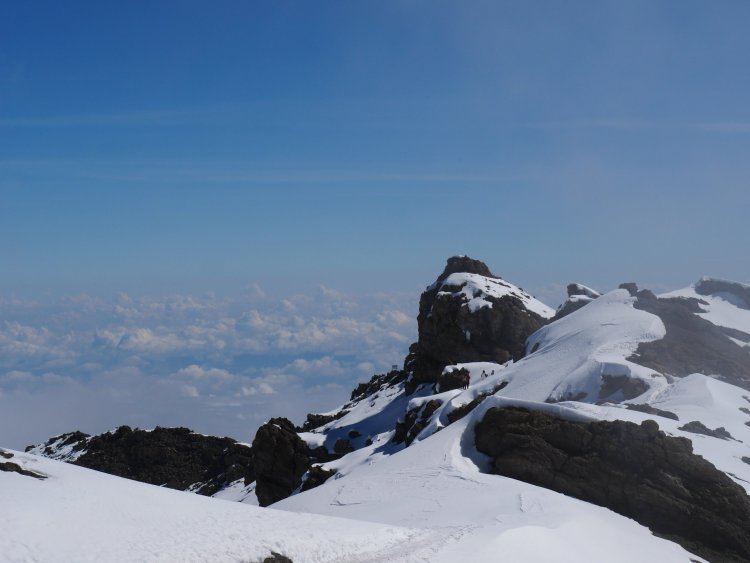
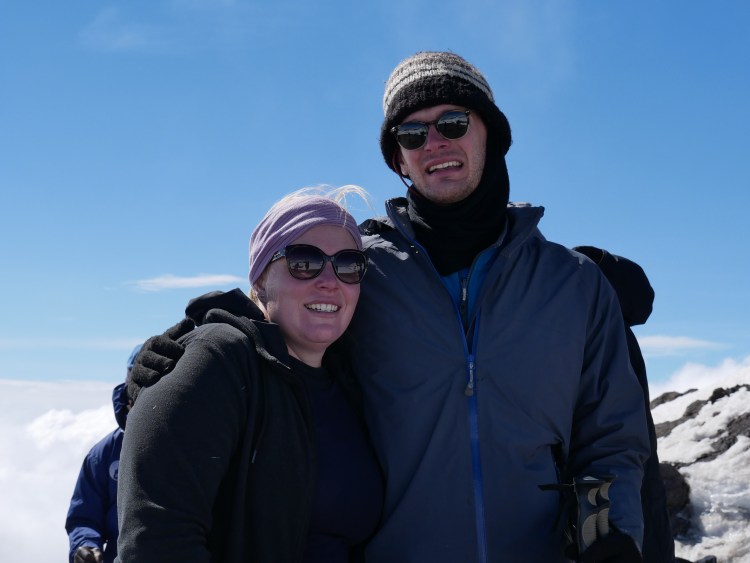
An emotional moment … probably can’t see the tears because they have frozen on our eyelashes
Around 11.30am we finally make it to Uhuru peak. It’s a moment that should be filled with triumph and pride and joy, but we are both so utterly exhausted we just feel numb. On the way up here we tried to focus only on the climb and not to think about the way back down, but now it dawns on us that we still have a very long day ahead of us.
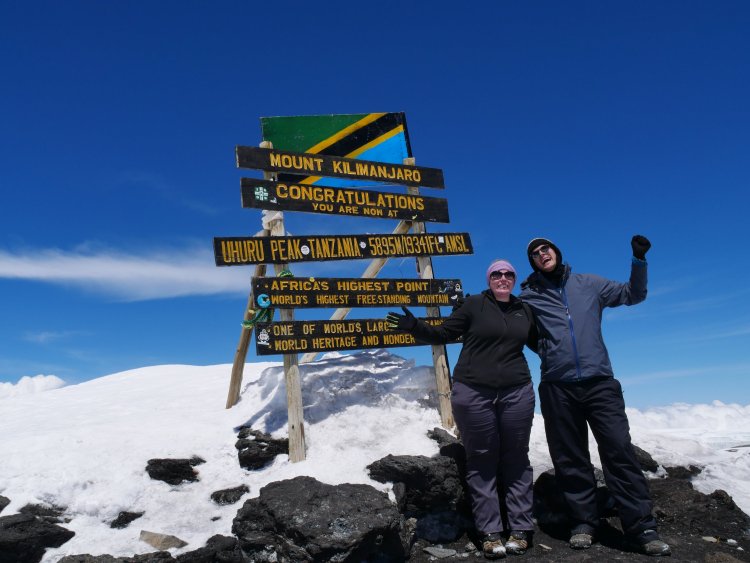
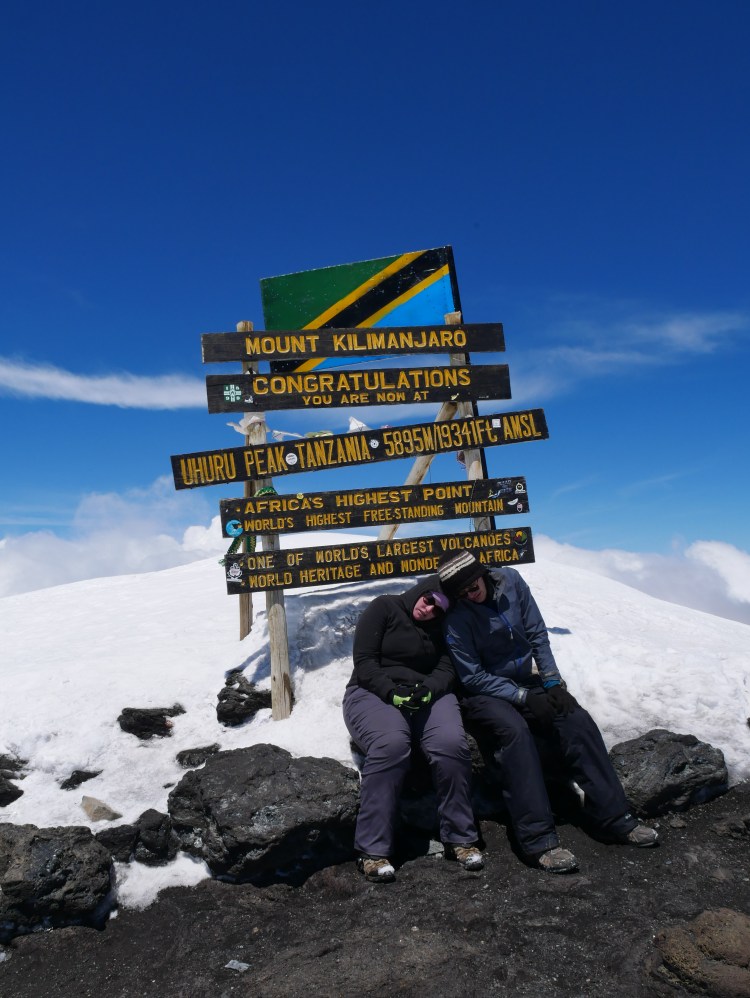
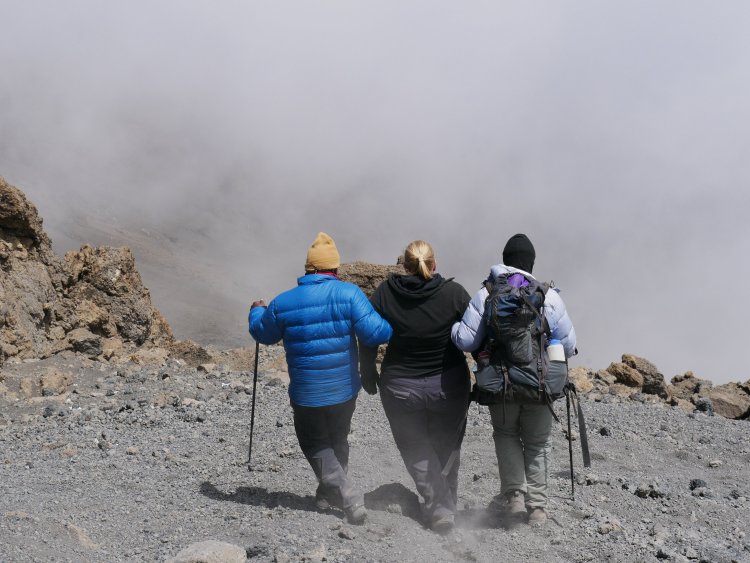
We head back to Stella Point as quickly as we can, and then back down the steep mountain face through the scree which is no longer frozen. It’s like skiing on sharp pointy rocks, with a very long way to roll down the mountain if you fall over. Reinforcement porters from our camp meet us half way down the mountain, to carry the packs (our guides and summit porter have been carrying our packs for a while now) and help us through the scree. Kirsten is going at a glacial pace because she is terrified of slipping, and ends up with a porter under each arm guiding her in where to put her feet and making sure she doesn’t fall. At this point she starts to have a lot of trouble breathing, and when the guides check her oxygen levels they have dropped way down to the low 70s. We push on back down to Barafu, stopping regularly for Kirsten to cough, and then try to gasp in some oxygen.
We make it back to Barafu around 3.30pm, but the day isn’t done yet. We ask if maybe we could just stay here for the night, but our guides say it’s important for us to descend at least one camp further because of the problems we are both having with the altitude now. We have an hour to pack up our things and eat some lunch. We both only manage a bowl of soup, and then we are off again. The walk to Millennium camp would be an easy one under normal circumstances, but it is far from it in our state of exhaustion. We go at a crawling pace, with Kirsten still struggling to breathe. Our guides give her supplemental oxygen at one point, which helps a bit. Our toes take a beating, having removed some of the extra sock layers we had on for the summit. We both end up with black toenails from this part. Kirsten also manages to rub up two giant blisters on her heels. We are beyond exhausted, and start to hallucinate things off the side of the path in the darkness.
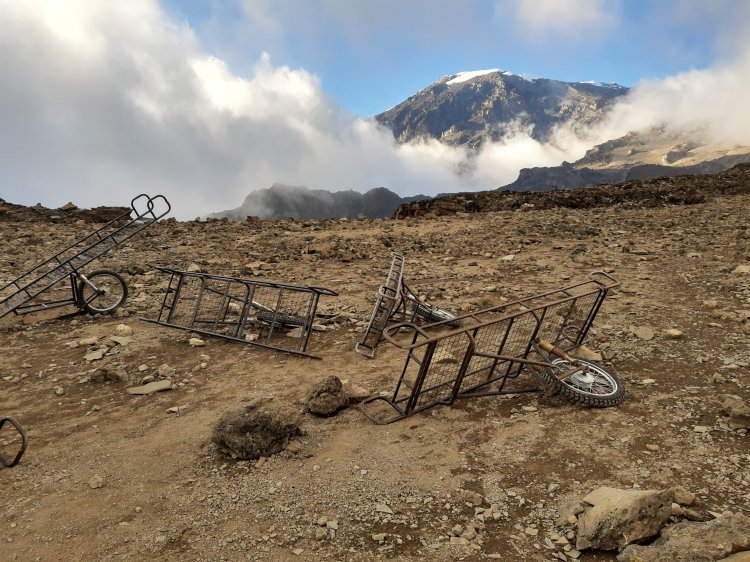
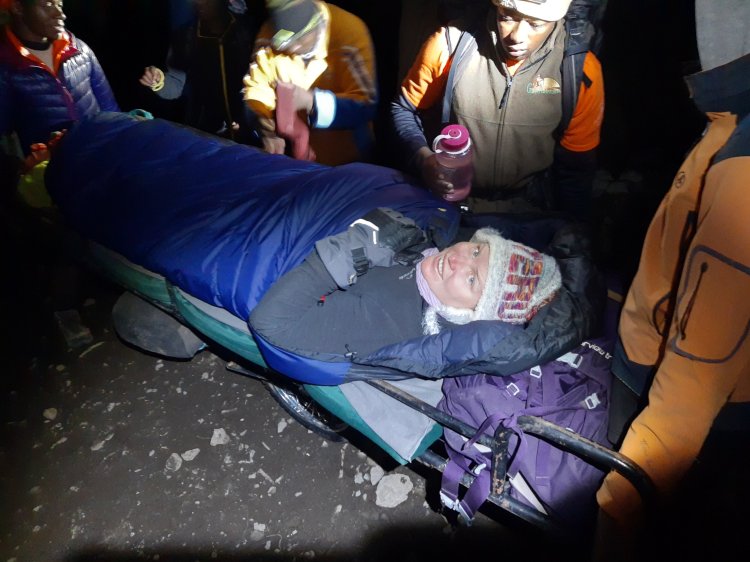
We finally make it to Millennium camp around 8.30pm. Kirsten falls asleep sitting upright in the dining tent. We can’t eat anything and just want to crawl into bed, but Kirsten is still coughing and feeling like she can’t breathe, and has started to cough up a tiny bit of blood along with the mucus. Her oxygen levels are still in the low 80’s, and our guides are worried about what could happen if she deteriorates in the night. Our guides make the call that we need to descend to the next camp, and it becomes clear that the helicopter we had always imagined would rescue us in such a situation is of no use to us now, because they only fly in the daylight. The only way to descend is by walking, or via a stretcher that’s welded to a mountain bike wheel, pushed along by porters. Kirsten REALLY does not want to go in the stretcher, having read that people often end up with more injuries from the stretcher ride than they had in the first place. But our guides say that if we stay Tim needs to sign a waiver saying we accept the risks of staying against their advice. So we agree to go. Tim has the choice between staying where he is for the night and walking down to the next camp in the morning, or walking along behind the stretcher now. He somehow manages to dig down and find the strength to accompany the stretcher for a terrifying 2-hour journey down to the next camp – running along behind it dodging rocks and trees. Our wonderful porters (who only made camp a few hours before) are split between pushing Kirsten in the stretcher and disassembling the rest of our camp and moving it down. We set out at midnight and arrive at Mweka camp at 2am. Kirsten’s oxygen levels have finally come back up to the low 90s, and the wheezing has subsided. We fall into our sleeping bags, absolutely exhausted, and pass out straight away.
Day 8
Mweka Camp to Mweka Gate (1,630m)
Up a bit later than our usual 6am after the horrors of the night before, we pack up our things one last time (with far less grace and consideration than usual). Everything we have with us is filthy and smelly, and we try to pick the least dirty thing to wear today. Feeling a lot better at the lower altitude, we set off to walk the final 10km to the park gate, down a pleasantly sloping path. It rains again – Kili’s big, wet kiss goodbye.
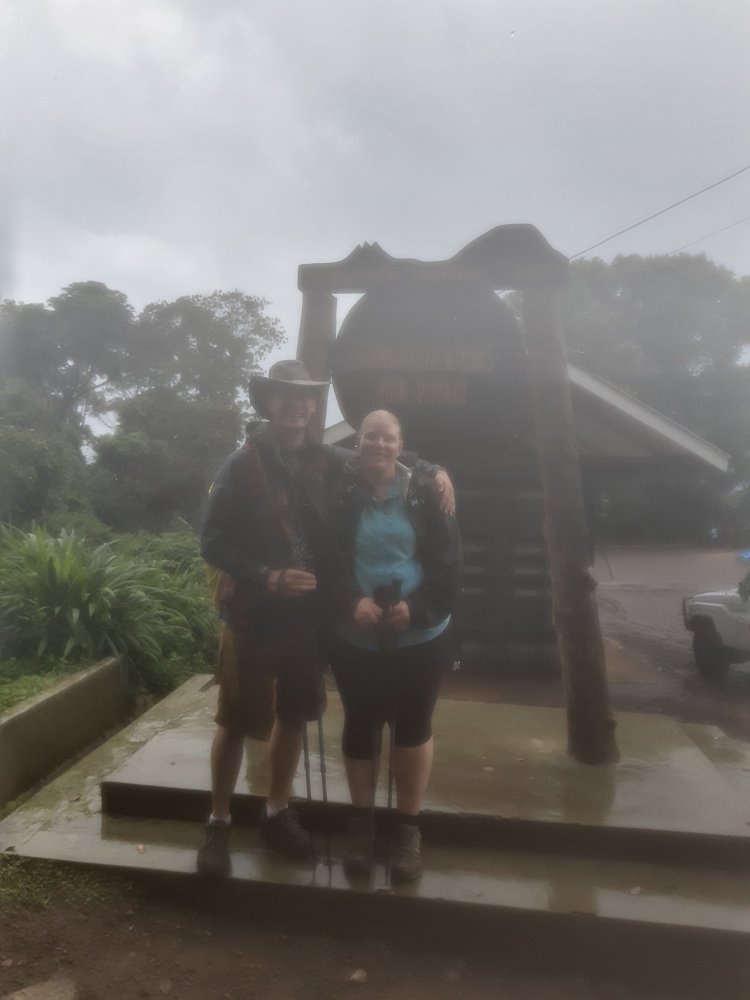
We reach the gate where we receive our certificates, and then head back into Moshi. Kirsten still has a very wet cough and a wheeze, so we head straight to the hospital for a quick check up and chest x-ray to confirm there is nothing nastier afoot. The doctor gives her the all clear – just a bit of bronchitis – and tells her to rest and it will get better.
We head back to the Secret Garden hotel for the shower that we have been dreaming of for days now. In our heads the slightly run-down bathroom of this 2-star hotel (an open shower that splashed all over the floor, but had plenty of very hot water) had become a place we fantasised about. After we get clean, we share a burger (which we don’t manage to finish – it will be days before our appetites return) and pass out.
 Dinky-Di Duo
Dear Kristen, congratulations on your amazing adventure glad you are both safe. I am reading this while treating myself to breakfast after two weeks in the fiel in Southern Laos.
LikeLike